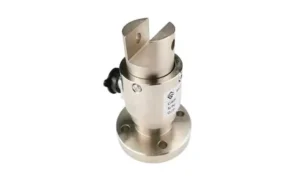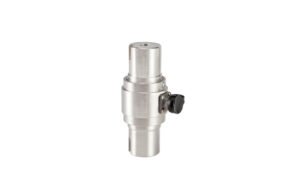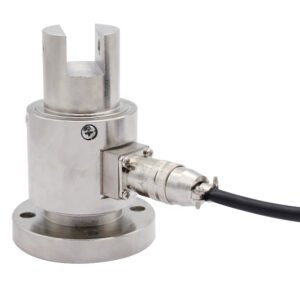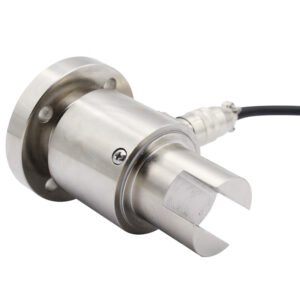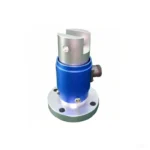
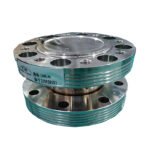
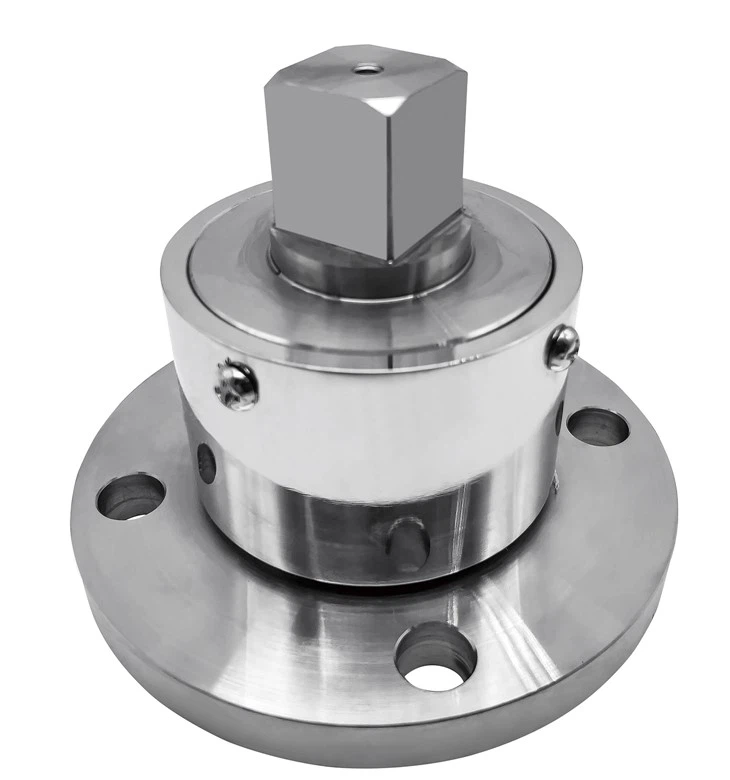
ZNJ-103 Static Torque Sensor For Calibration Overload Protection
Torque Sensor For Calibration Overload Protection, also known as a reaction torque transducer, measures the twisting force on a non-rotating object or in a steady, slow-moving system. They are designed to measure the reaction torque, the twisting force generated against a fixed support, without measuring continuous rotation. These sensors are highly valued for their stability, precision, and durability.
How a static torque sensor works
Static torque sensor for calibration or overload protection typically operate using strain gauge technology. The process works in a step-by-step manner:
1. The sensor is attached to a component or shaft where torque measurement is required.
2. When torque is applied, the internal elastic element of the sensor undergoes a slight mechanical deformation or twist.
3. Strain gauges, which are electrical resistors bonded to the elastic element, also deform. This deformation causes a change in their electrical resistance proportional to the applied torque.
4. A Wheatstone bridge circuit converts the resistance change into an electrical signal, typically a voltage.
5. This electrical signal is then amplified, processed, and translated into a precise torque reading.
◆ Dimensions:

| Capacity Range (N.m) | VK | A | B | C | D |
| 5-15 | 1/4″ | 52.5 | 10.5 | 7.5 | 8.5 |
| 20 – 50 | 3/8″ | 56 | 14 | 11 | 12.8 |
| 100 | 1/2″ | 60 | 18 | 15 | 17 |
| 200-500 | 3/4″ | 80 | 28 | 23 | 26 |
| 1000 | 1″ | 85 | 33 | 28 | 34 |
◆ Features and Applications
Aerospace: Calibrating torque wrenches and ensuring the precise tightening of fasteners during aircraft assembly.
Automotive: Verifying the final torque on fasteners during quality inspection on assembly lines.
Manufacturing: Monitoring the tightening process in robotic assembly and testing material torsional properties.
Energy: Measuring and optimizing equipment in power plants and renewable energy facilities, such as wind turbines.
Calibration: Providing a standard torque value for the calibration and verification of other torque measurement equipment.
For Torque Wrenchs calibration. Also for Electric And Pneumatic torque tools (Thanks to the “time answer” and “mechanic protection against overload” features)
◆ Technical parameter
| Parameters | Specification |
| Capacity | 0~20,50,100,200,300,500Nm |
| Rated Output | 1.5+10% mV/V |
| Zero Balance | ±1%FS |
| non Linearity | +0.1-0.3%FS |
| Hysteresis | ±0.05%F.S |
| Rapeatability | 0.05%F.S |
| Creep | 0.03%F.S/30min |
| Tamp Effact On Output | 0.03%F.S/10℃ |
| Temp Effect On Zero | 0.03%FS/10℃℃ |
| lnput impedance | 350/750+100 |
| Output impedance | 350/700+50 |
| Raspones Fraquency | 100μS |
| Insulation | ≥5000MΩ/100V |
| Recommended Excitation | 10V(DC) |
| Compensated Temp Range | -10 ~ 60℃ |
| Operation Temp Range | -20 ~ 65℃ |
| Safe verload | 150%F.S |
| Wltirnate Overload | 200%F.S |
| Cable Size | 05.2x3m |
| Cable Color Code | Input Red( +), Black(-)Output Green(+), white(-) |
| Material | Stainless steel/Alloy steel |