

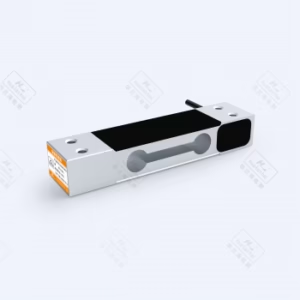
The sensor elastomer is made of aluminum alloy; Glue seal treatment, colorless anodized surface, Protection level to IP67.

The elastomer of sensor is made of aluminum alloy, sealed by glue, colorless anodized on the surface, Protection level reaches IP65.

The sensor elastomer is made of aluminum alloy; Glue seal treatment, colorless anodized surface, Protection level to IP67.
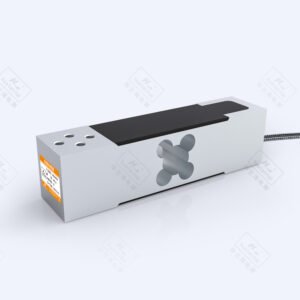
The elastomer of sensor is made of aluminum alloy, sealed by glue, colorless anodized on the surface, Protection level reaches IP65.

The elastomer of sensor is made of aluminum alloy, sealed by glue, colorless anodized on the surface, Protection level reaches IP65.
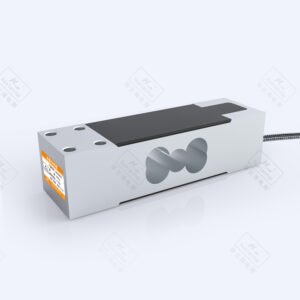
The elastomer of sensor is made of aluminum alloy, sealed by glue, colorless anodized on the surface, Protection level reaches IP65.


Accuracy class :C3
Protection Class :IP68
Material:Alloy Stell

Capacity: 5-50t
Steel ball loading, strong restoration ability
Easy complete installation, high weighing accuracy
OIML C3 certificate
Alloy Steel, stainless steel

Cptional Data update rate: 6.25 times/sec, 12.5 times/sec, 25 times/sec,50 times/sec
Two-way relay output: Two normally open contacts※ lsolated RS232 and RS485 interfaces
Three kinds of calibration methods can be adapted to many occasions※ with analog signal output: 4~20mA,0~20mA, 0~5V or 0~10V (one in fourselected)
Independent Large screen interface (current loop mode)

A cantilever beam load cell consists of an elastic body, strain gauges, and measurement circuitry. Cantilever beam sensors typically employ a single-end fixed configuration, where one end is rigidly fixed while the other end is freely suspended. Unlike parallel beam sensors, the strain gauges for cantilever beam sensors need to be affixed closer to the fixed end, whereas those for parallel beam sensors are attached to the top and bottom surfaces of the two beams. The working principle of load cells can be referenced from the introduction of CP series load cells.
Our company’s CBD series digital cantilever load cell is a digital sensor that comes with a high-precision analog-to-digital conversion module, allowing it to output digital signals rather than analog ones. Compared to analog sensors, digital sensors have the following advantages:
1. Digital signals have stronger interference resistance;
2. They support various compensation functions, such as temperature compensation and load offset compensation;
3. Communication speed is significantly improved compared to analog signals.
The CBD series digital load cells offer a wide measurement range from 220 kg to 4400 kg, with an accuracy class up to C6 level. Additionally, they feature IP68/IP69K protection ratings, providing better protective performance in industrial production environments.
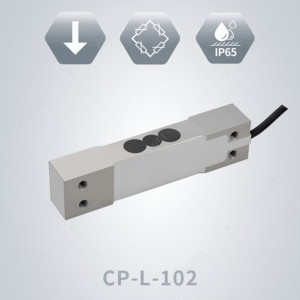
Parallel beam sensors mainly consist of an elastic body, strain gauges, and measurement circuits. The elastic body of parallel beam sensors uses a dual parallel beam structure, typically made from aluminum alloy or stainless steel. When the elastic body deforms under external force, the strain gauges attached to its surface also deform, causing changes in their resistance values. These changes in resistance values are converted into electrical signals through the measurement circuit and then transformed into readable weighing values via an analog-to-digital converter (ADC module). Parallel beam sensors, known for their simple structure, high precision, wide measurement range, and good stability, have become one of the most commonly used types of load sensors in industrial fields, especially suitable for high-precision measurement scenarios.
Our company’s CP series parallel beam load cells are high-performance single-point load cells with a measurement range of 3 kg to 750 kg, available in multiple size specifications. The product has obtained the China Measuring Instruments Type Approval Certificate (CPA) and achieves precision levels of C5/C6, with repeatability error ≤ ±0.01 F.S., meeting customers’ precision requirements across different weighing ranges. The operating temperature of the product is -30°C to +65°C, with an IP67 protection rating. It features automatic corner adjustment, compact design, and temperature compensation, significantly enhancing its accuracy and stability when used in industrial environments. Due to its excellent performance, the CP series load cells are widely used in various industrial and retail weighing applications such as electronic price scales, packaging scales, and process weighing control systems.
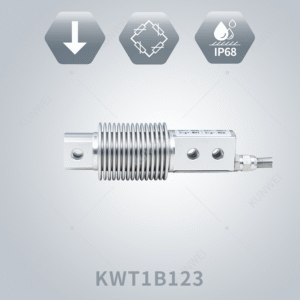
The KWT1B123 load cell is one of the typical shear beam load cells. It has extremely accurate measurement results, and has a certain self-protection ability. All stainless steel and hermetically sealed the compact size of KWT1B123 makes it the ideal choice for multi-head weighing equipment and low capacity vessel and so on.
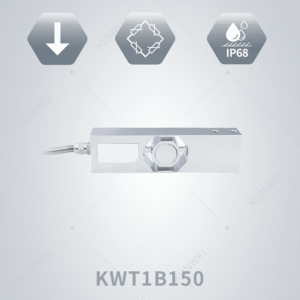
KWT1B150 is a kind of normal structure weighing sensor, the deign of its tructure makes this weighing sensor easy to install and integrate.


The 616 is a pivot pin load cell with a measurement range of 2 to 40 tons.
It is made of alloy steel with a nickel-plated surface. The structure features a hollow circular shaft, providing excellent torsion and bending resistance.
Its compact design allows for easy installation, and it can be customized to meet customer requirements.
Ideal for ropes, shackles, bearing housings, and other weighing equipment.

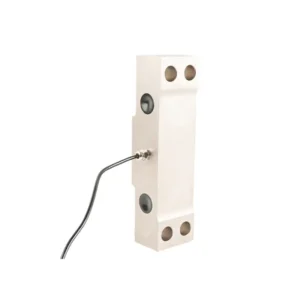
The 607A is a 30-ton double-ended shear beam made of alloy steel with an IP66 protection rating.
Its weighing capacity starts from 30 tons.