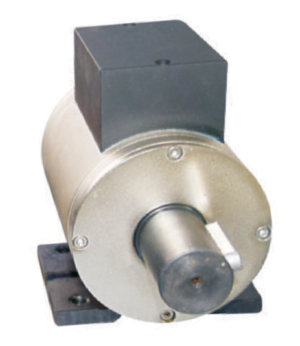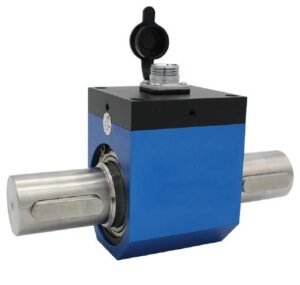
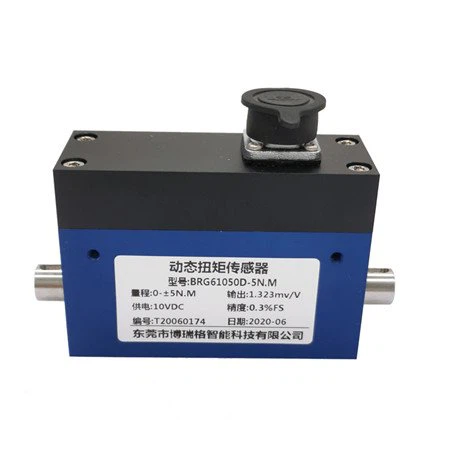
BRG61050D Rotary Torque Sensor

1. Resistance strain is an integrated product composed of sensitive components and integrated circuits.
2. High precision, stable and reliable performance.
3. Output positive and negative torque signal.
4. Both ends are key connections,
5. The speed can reach 1800 rpm.
Technical Parameters
| parameter | Technical index | parameter | Technical index | |
| range | 0-0.1, 0.2, 0.3, 0.5, 1-5, Nm | Output resistance | 700±5Ω | |
| Sensitivity | 1-1.5 mV/ V | Insulation resistance | ≥5000MΩ/ 100VDC | |
| Zero output | ±2% F.S. | Excitation voltage | 10-15VDC | |
| Non-linear | ±0.1, 0.3% F.S. | Temperature compensation range | -10 ~ 60℃ | |
| Hysteresis | ≤±0.05% F.S. | working temperature | -20 ~ 65℃ | |
| Repeatability | ≤±0.05% F.S | Safety overload | 150% F.S. | |
| Creep | ≤±0.03% F.S/30min | Extreme overload | 200% F.S. | |
| Temperature sensitivity drift | 0.03% F.S./ 10℃ | Cable size | Ø5.2×3m | |
| Zero temperature drift | 0.03% F.S./ 10℃ | Electrical connections | red/E+, black/E-, green/S+, white/S- | |
| Input resistance | 750±10Ω | Material | stainless steel or alloy steel |
Dimension (mm)

Signal processing
1: It can also be equipped with the company’s secondary instrument, Using the series of torque instrument to display the torque value.
2: The torque value can be transformed to 4-20m A or 0-5V ,0-10V analog signals by the circumscribed modules.
3: Sending the torque frequency signal to computer or PLC to processing directly.

Torque sensor installation requirements:
1. Measure the shaft diameter and center height of the torque sensor.
2. Use two sets of couplings to install the torque sensor between the power source and the load.
3. The sensor can be connected with a rigid or elastic coupling. When the vibration is large and the concentricity is less than 0.2mm and greater than 0.05mm, it is recommended to use an elastic coupling. When the installation coaxiality exceeds 0.2mm, it is strictly prohibited to use it.
4. The torque sensor/torque sensor power and load equipment must be fixed reliably to avoid vibration.
5. Fix the base of the torque signal sensor and the base of the equipment reliably to avoid bending moments.
6. Regardless of whether the standard sensor is installed horizontally or vertically, the sensor is not allowed to withstand excessive axial force or bending moment, otherwise it will affect the use of the sensor and even cause damage to the sensor.
High Precision
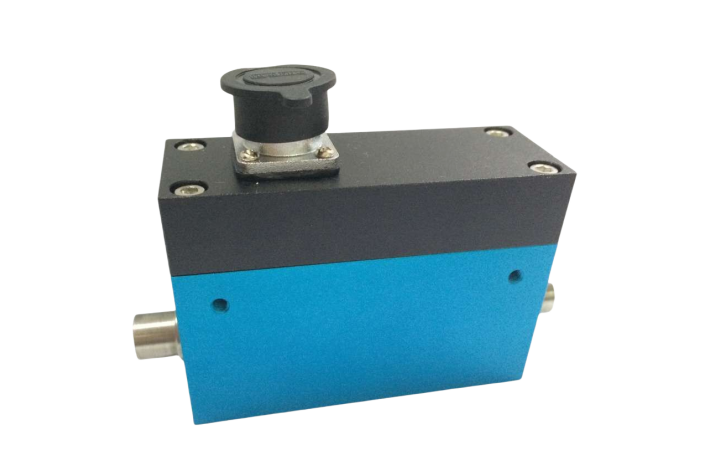
The resistance strain gauge integrates a sensitive element and integrated circuit for reliable performance. It has no wear parts such as slip rings and can operate at high speeds for extended periods.

High Speed Output
It outputs forward and reverse torque signals, with keyed connections on both ends, and can reach a maximum instantaneous speed of 3000 RPM.
1. Detect the output torque and power of rotating power equipment such as generators, electric motors, and internal combustion engines.
2. Detect the load torque and input power of reducers, fans, pumps, mixers, hoists, propellers, drilling machinery and other equipment.
3. Detect the torque during the working process of various machining centers and automatic machine tools.
4. The torque and efficiency transmitted by various rotating power equipment systems;
5. While detecting torque, it can also detect rotation speed, rotation torque sensor direct sales quotation, and axial force.
6. Can be used to manufacture viscometers, electric (pneumatic, hydraulic) torque wrenches.

Equipment 1
Laser making machine ; temperation compensation machine ; pressure calibaraton ; mensor pressure calibrator ; laser welding machine ; Testing machine .


Equipment 2
auto-circuit inspection; contronller for temperation; circuit inspection ; EMC; Fatigue test .
Different types of torque sensors
Two kinds of torque sensors, static torque sensor and dynamic torque sensor, non-standard torque sensor, with many years of industry experience, the torque sensor has high precision, fast response, long life, easy operation and maintenance-free. We not only provide products, but also provide solutions.