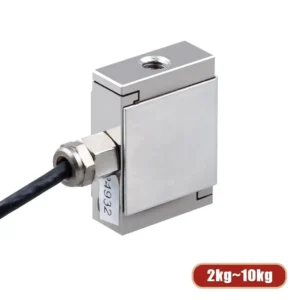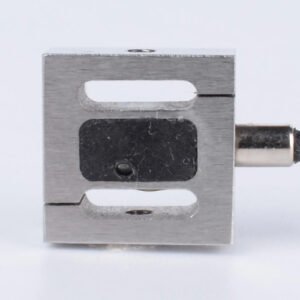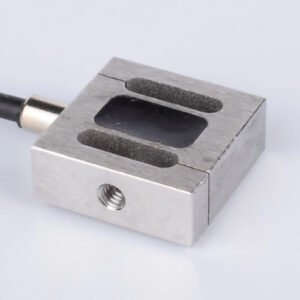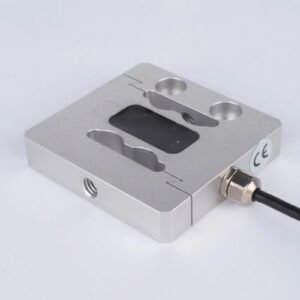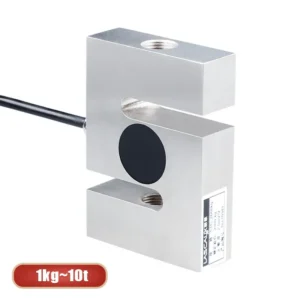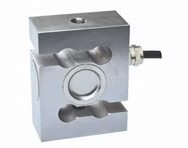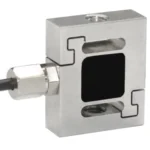
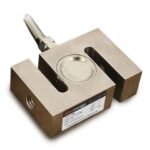
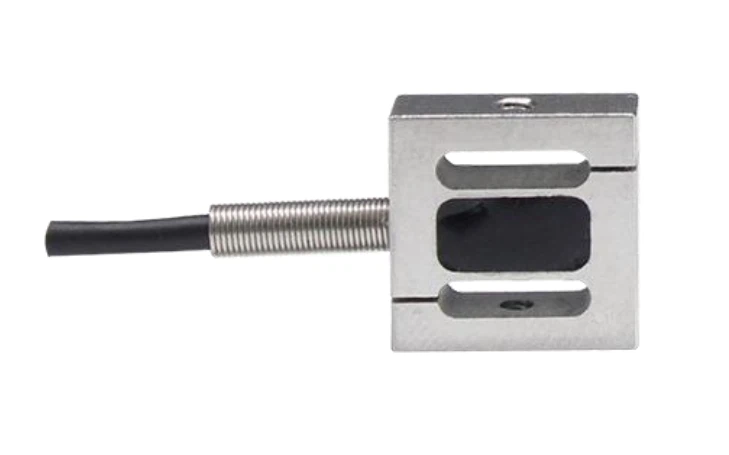
BRG-LY109 micro S type load cell 0.5-10kg

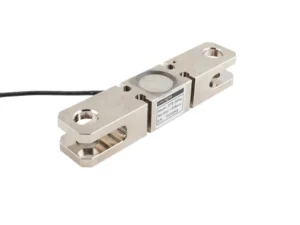
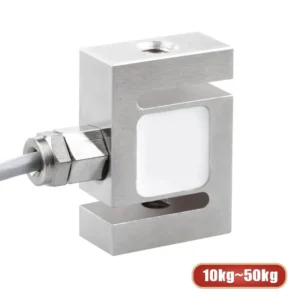
S type load cell are bending beam load cells used for weighing applications under 50 lb. or 22 kg. They have a metal spring element that deforms when a force or weight is placed on the load cell. The strain gauge in the load measures the fractional change in the length of the deformation. S beam load cells are used in scales and tension applications.
S beam load cells are very popular due to their precision, low price, and ease of installation. They are designed for inline applications and are sensitive to outside loads and torque. S beam load cells must be centered to the load and have proper directionality.
Features
1.Pull pressure two-way force ·
2.The structure is compact·
3. The comprehensive accuracy is high ·
4. Long-term stability is good ·
5. Quality alloy steel with nickel plating
6. Very small dimension suitable for the narrow installation space
Electrical Connection

Technical Data

1 ) High temperature sensors are availabl e, wi th a maxi mum operating temperature of 1 50℃.
2) High impedance sensors can be provided with an output impedance of 1 000 Ω
Dimension (mm)


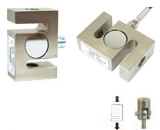
Force diagram

Application
1. Food Processing
2. Industrial Warehousing
3. Building and Construction
4. Transportation
5. Research Laboratory and Pharmaceutical Production
6. Load cells are part of security systems, electrical weighing scales, personal scales, thermometers, machines in the defense sector, industrial automation, submarine pressure sensing, and material testing.
Importance of Load Cells
As technology has grown and evolved, manufacturing and production have developed wider width machines in order to process a broader range of materials, resulting in a greater emphasis on tension control. Without accurate controls, distortions, errors, and flaws can appear in final products causing costly downtime.
In order to control and monitor tension and application weight, there has to be a precise, accurate, and constant measurement of production processes. These oversight devices and regulating systems must be placed in the production process and be preset with maximum and minimum levels.
Load cells are strategically placed in processes to take sequential measurements and convert their readings into electrical signals. The quality of those signals provides essential data regarding stability and the effectiveness of a process. The demands on production requirements are becoming greater, making load cells an essential inline component.