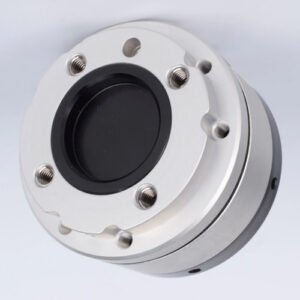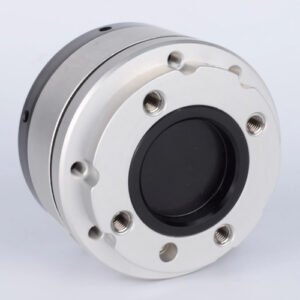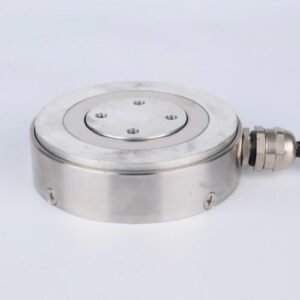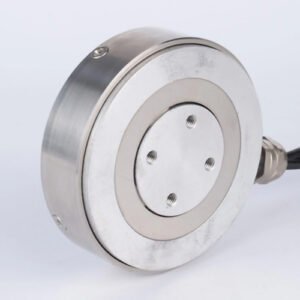
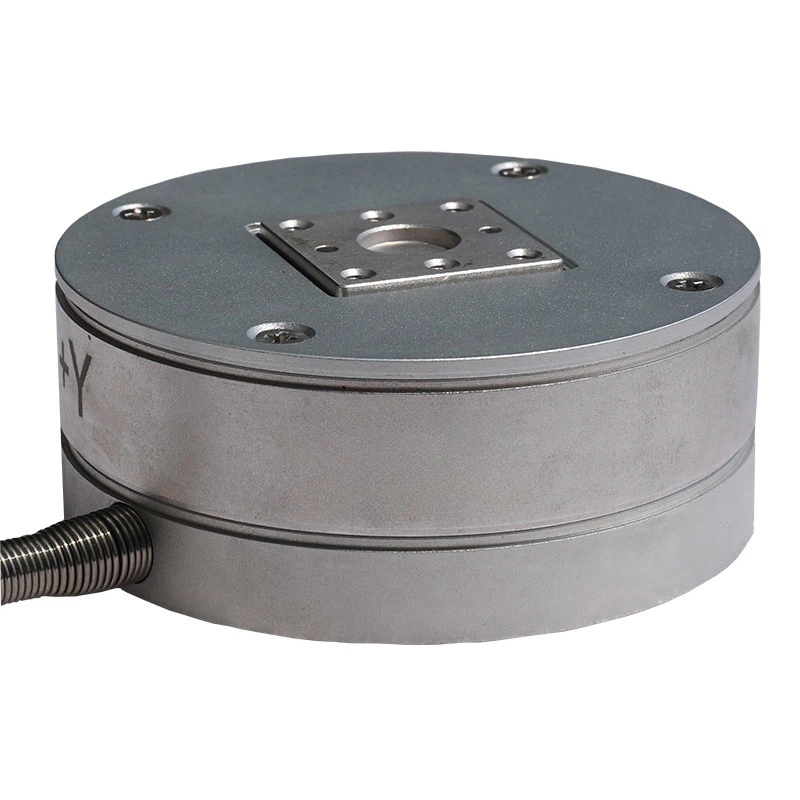
3 Axis Force Sensor Load Cell
Product Description
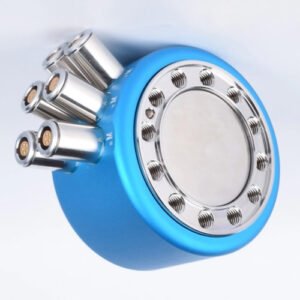
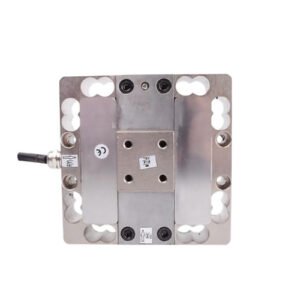
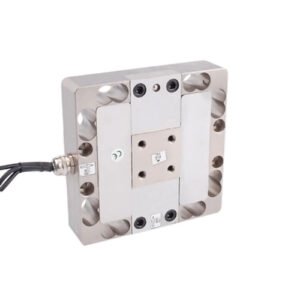
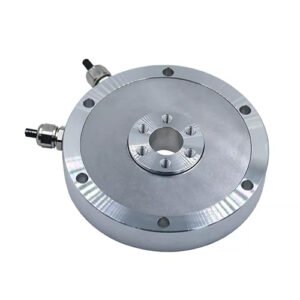
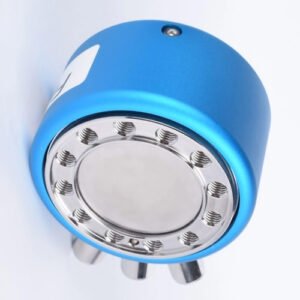
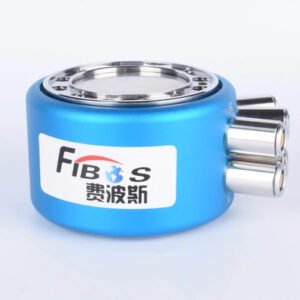
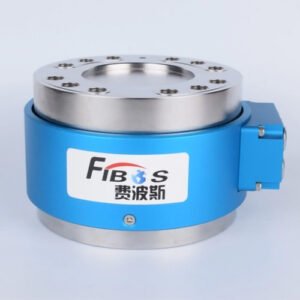
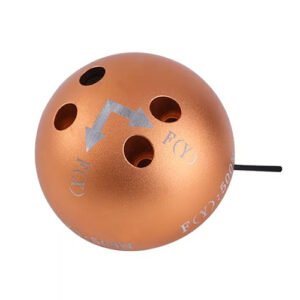
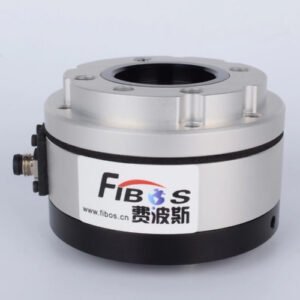
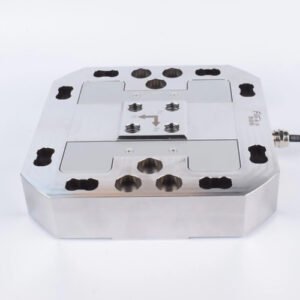
The BML series is an aluminum alloy analog 3D force sensor designed for scientific instrumentation and precision testing applications. It features a high-stiffness design, high resolution, and high accuracy, offering a robust bending moment load capacity. Suitable for scientific instrumentation, scientific research, and other force measurement and control applications, the sensor is compatible with various communication interfaces, including EtherCAT, EtherNet, RS485/RS232, CAN, and USB.
Technical Parameters
| Model | BML25002AAO | BML21003AAO | BML22003AAO | BML25003AAO | BML21004AAO | BML22004AAO |
| Range(Fx/Fy/Fz) | 50N | 100N | 200N | 500N | 1000N | 2000N |
| Mechanical properties | ||||||
| Weight(with cable) | 920g | 923g | 928g | 957g | 969g | 979g |
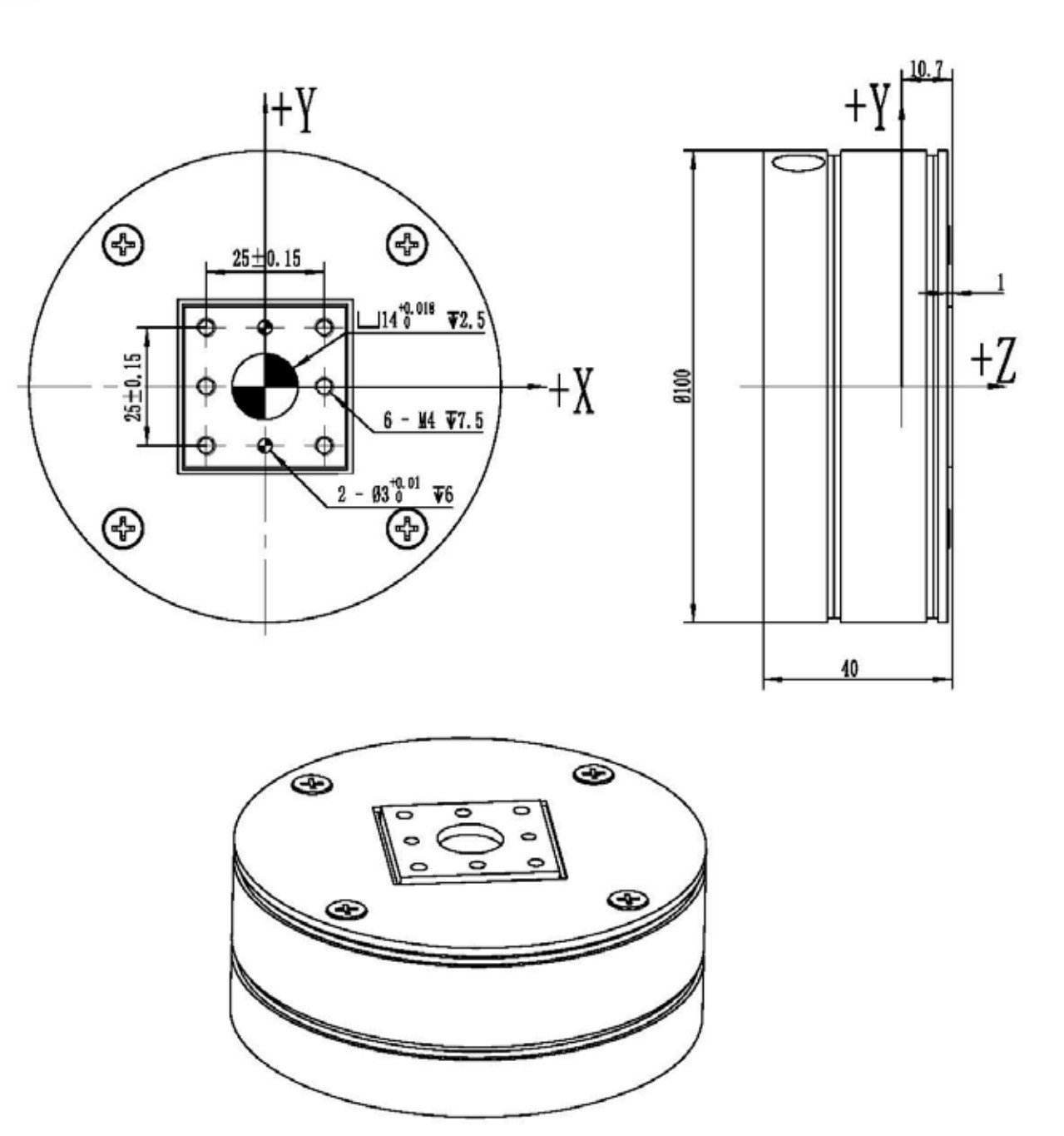
| Dimension | Φ 100 mm×40mm | Φ 100 mm×41mm | ||||
| Protection grade | IP65 | |||||
| Overload | 250%FS | 400%FS | 250%FS | |||
| Electrical characteristics | ||||||
| Input impedance | 350 Ω | |||||
| Output impedance | 350 Ω | |||||
| Recommended operating voltage | DC6V | |||||
| Interface form | 16 PIN aviation plug | |||||
| Cable length | 5m | |||||
| Accuracy grade | ||||||
| Resolution | 0.1%FS | |||||
| Nonlinear | 0.05%FS | |||||
| Zero drift | 0.02%FS/10min | |||||
| Accuracy | 0.2%FS | |||||
| Repeatability | 0.2%FS | |||||
| Temperature characteristics | ||||||
| Temperature zero drift | 0.2%FS/10℃ | |||||
| Storage temperature | -25 °C ~50 °C | |||||
| Usage Environment | 0 °C~40 °C,20~80% RH | |||||
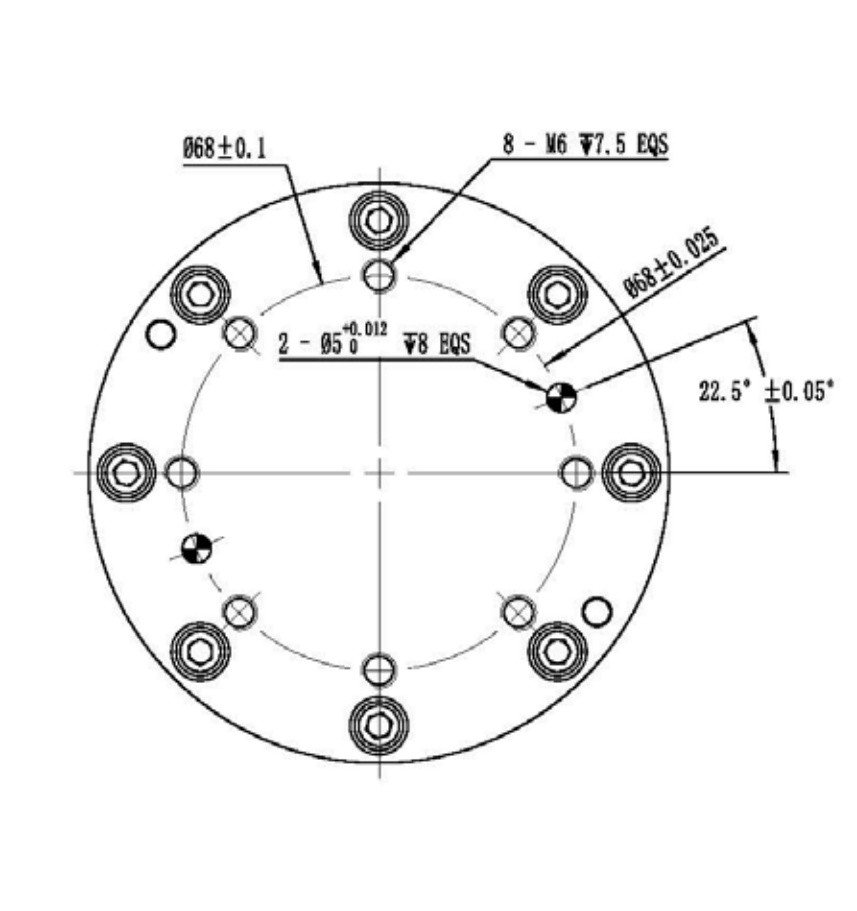
Dimension (mm)
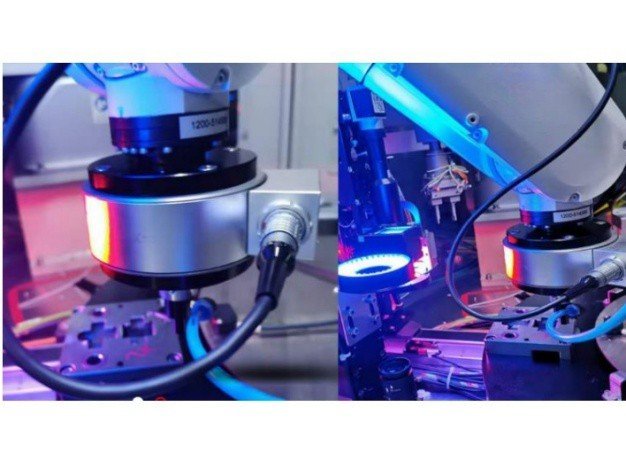
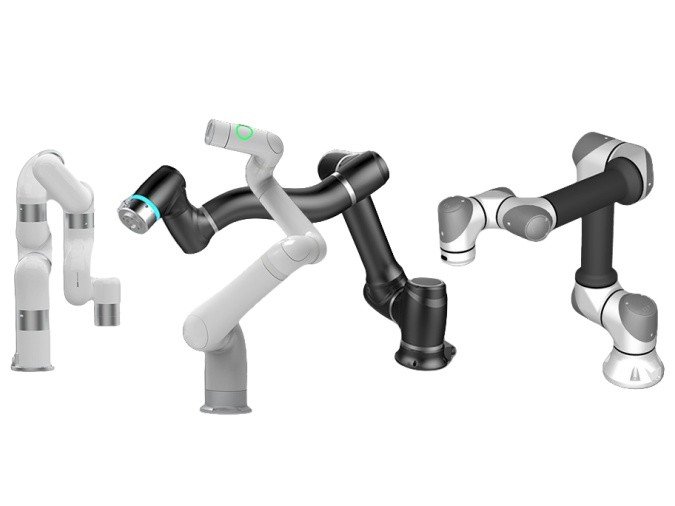
Three-dimensional force sensors play an important role in multiple fields. In industrial robotics, 3D force sensors installed on the robot’s end effector sense the force information when the robot contacts the workpiece, enabling force control in precision assembly, grinding, and polishing operations. This prevents damage to the workpiece due to excessive force or compromised processing quality due to insufficient force.
In aerospace, 3D force sensors are used for force measurement in aircraft engine testing and spacecraft docking mechanisms, providing data support for equipment performance evaluation and safe operation. In automotive manufacturing, they are used for strength testing and collision testing of automotive components, measuring the mechanical response of components under different load conditions.
In biomedicine, 3D force sensors are used in minimally invasive surgical robots to measure the interaction between surgical instruments and human tissue, enabling doctors to perform more precise operations and minimize trauma to patients. In sports research, they can be used to analyze the force exerted by athletes’ movements, providing a scientific basis for training.