

BRG9500 Disc Torque Sensor
Product Introduction
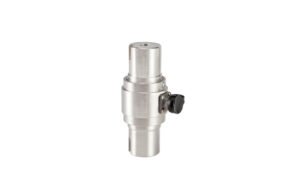
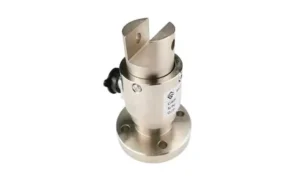
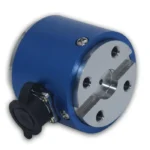
Disc torque sensors are designed for easy integration into servo or stepper motor systems, using strain gauge technology for accurate torque measurements. Made from durable stainless steel, they have a low non-linearity of just 0.3%, ensuring high accuracy.
We can offer various measuring ranges-50 N·m, 100 N·m, 200 N·m, 500 N·m, and 1000 N·m-allowing users to choose the right option for their needs. Their low-profile, through-hole design and flange-to-flange mounting enable compact integration into robotic systems.
By providing real-time torque data, the sensors enhance joint motion control, leading to smoother and more precise movements. This is especially beneficial in applications like collaborative robotics, surgical robotics, and delicate assembly tasks.
Technical Parameters of Disc Torque Sensor
| parameter | Technical index | parameter | Technical index | |
| range | 0-50, 100, 200, 500, 1000Nm | Output resistance | 700±5Ω | |
| Sensitivity | 1.5±10% mV / V | Insulation resistance | ≥5000MΩ/ 100VDC | |
| Zero output | ±2% F.S. | Excitation voltage | 10-15VDC | |
| Non-linear | ±0.1, 0.3% F.S. | Temperature compensation range | -10 ~ 60℃ | |
| Hysteresis | ≤±0.05% F.S. | working temperature | -20 ~ 65℃ | |
| Repeatability | ≤±0.05% F.S | Safety overload | 150% F.S. | |
| Creep | ≤±0.03% F.S/30min | Extreme overload | 200% F.S. | |
| Temperature sensitivity drift | 0.03% F.S. / 10℃ | Cable size | Ø5.2×3m | |
| Zero temperature drift | 0.03% F.S. / 10℃ | Electrical connections | red/E+, black/E-, green/S+, white/S- | |
| Input resistance | 750±10Ω | Material | stainless steel or alloy steel |
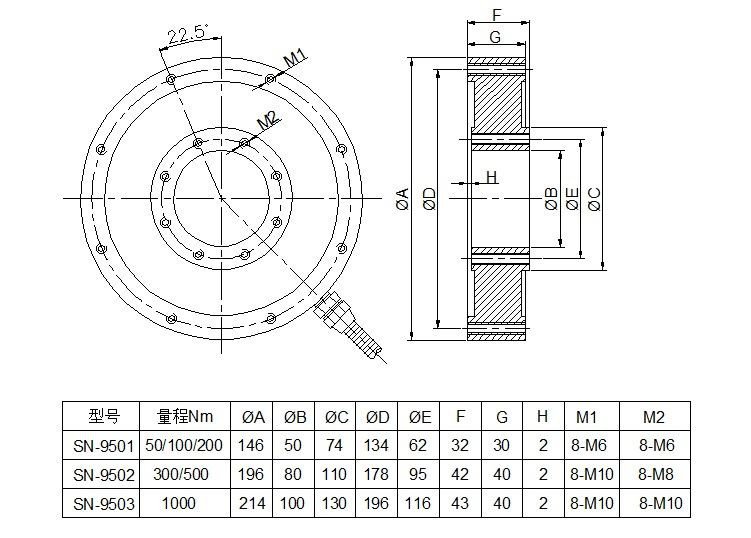
Dimension (mm)

applications
Robot torque sensors are essential for measuring joint torque in robotic systems, facilitating smoother and more precise motion control. Their applications span various fields, particularly in robotics, where they enhance the functionality and safety of robots.