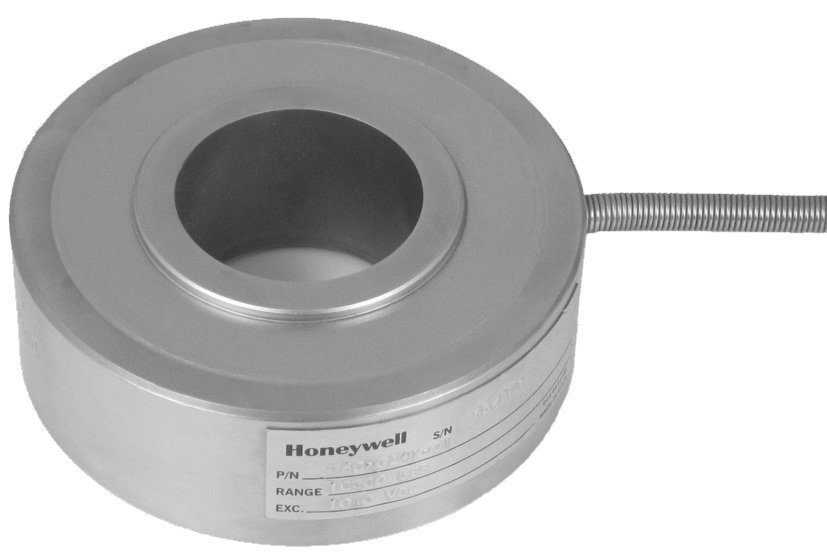
Honeywell Model D Thru-Hole Load Cell


 케이센서스 스마트스토어
 |
The Model D Donut Shaped Load Cell features a smooth thru-hole design often ideal for applications which require the load structure to pass directly through the cell. Such applications include bolt force measurements, clamping forces, and monitoring overloads. Load ranges as low as 150 grams and as great as 30,000 pounds can be measured within a maximum full scale non-linearity and hysteresis of ±0.5 % F.S., respectively. These models are used in compression applications and are available in multiple hole and frame sizes. For optimum performance, these cells must be mounted between load surfaces which are flat and parallel. The Model D miniature load cell is designed to have a minimum thickness.
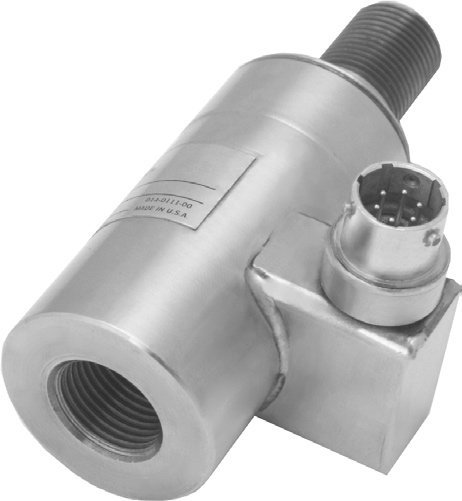
The Model RGH In-Line load cells are high quality, stainless steel, rugged load cells capable of withstanding significant off-axis loads, making them an ideal choice for in-line compression measurement or tension measurement where side loading cannot be completely controlled. The flexible mounting options make applications easier to implement, and the all stainless steel, hermetic construction is well suited to corrosive and very high humidity environments.
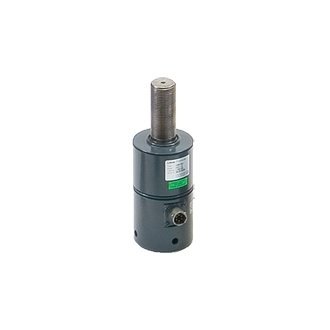
The small-diameter, cost-efficient, fatigue-resistant load cells are designed to be used in applications that require an ability to mount in an existing system with restricted working area. They are commonly used in fluid power transfer systems. Their low cost and ease of mounting allow simultaneous testing of multi-element systems.
They may be directly attached to the piston rod of a hydraulic cylinder. Side-mounted cable connectors allow cable assemblies to be supported without affecting movement of the cell during tension or compression loading.

The small-diameter, cost-efficient load cells are designed to be used in applications that require an ability to mount in an existing system with restricted working area. They are commonly used in fluid power transfer systems. Their low cost and ease of mounting allow simultaneous testing of multi-element systems.
They may be directly attached to the piston rod of a hydraulic cylinder. Side-mounted cable connectors allow cable assemblies to be supported without affecting movement of the cell during tension or compression loading.

Model TH Donut Shaped Load Cell features a smooth thru-hole design for use in applications which require the load structure to pass through the cell. Such applications include bolt force measurement, post or leg mount, and rolling mill systems. Load ranges as low as 15,000 pounds and as great as 200,000 pounds can be measured within a maximum full scale non-linearity of ±0.25. This model is used in compression applications. For optimum performance, this load cell must be mounted between load surfaces which are flat and parallel. The Model TH Donut Shaped Load Cell is designed to provide the customer with an internal hole diameter which is large relative to the outside diameter. The Model TH is a small size, high capacity load cell.

The compact Model MPB Load Cells are designed for applications requiring high capacity yet where space restrictions require that the cell be small in size. The Model MPB will measure compression load forces in ranges between 15,000 to 2,000,000 pounds.
Applications include impact testing and mine shaft roof simulations. The diameter of these load cells range between 1.25 in and 10 in while the height ranges between approximately 0.63 in and 14 in depending on the load range desired.
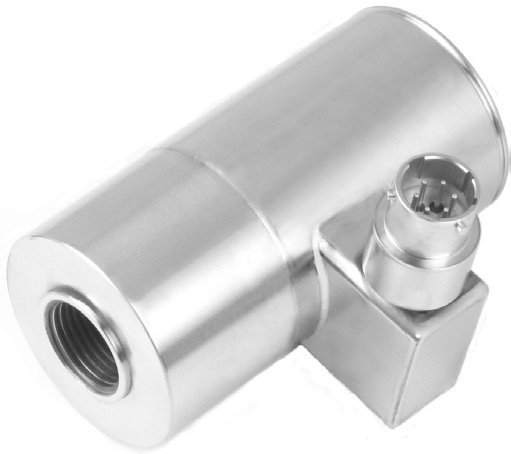
The Model RGF In-Line load cells are high quality, stainless steel rugged load cells capable of withstanding significant off-axis loads, making them an ideal choice for in-line compression measurement or tension measurement where side loading cannot be completely controlled. The flexible mounting options make applications easier to implement, and the all stainless steel, hermetic construction is well suited to corrosive and very high humidity environments.
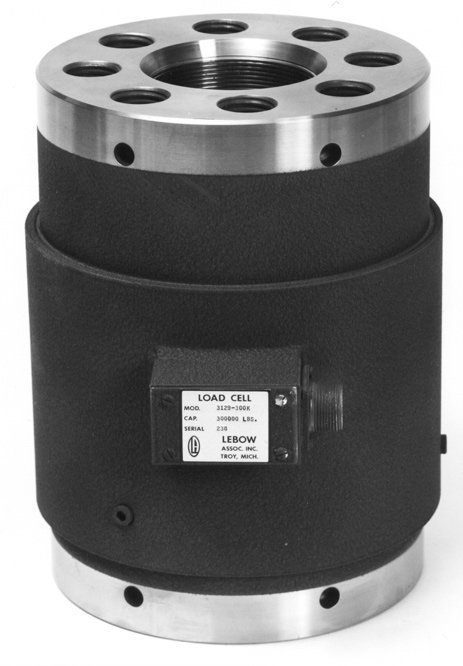
The Model 3129-121 fatigue-resistant load cells are extremely resistant to extraneous bending and side loading forces. The structure virtually eliminates bending strains at the strain gage, minimizing the primary cause of load cell failure. Dual bridge option available for feedback control and redundancy.
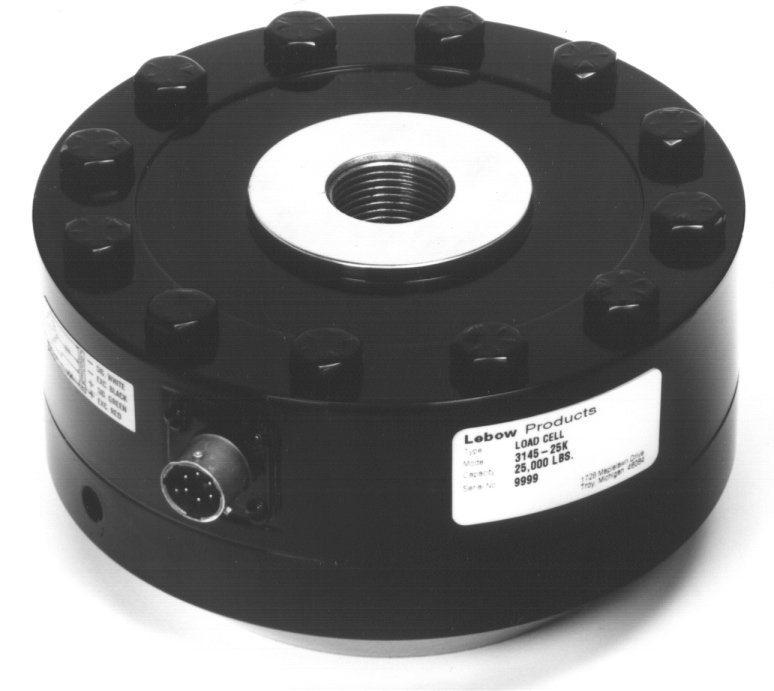
Designed for general purpose use in demanding applications in automotive, aerospace, and military applications. Some advantages of these tension/compression load cells include compact size, high accuracy, and cost efficiency. The 3140-P has smaller maximum off-center load and moment error than the standard 3140 Series.

Model 3632 Compression Donut Load Cell features a smooth thru-hole design for use in applications which require the load structure to pass through the cell. The hollow load cells are available for compression only loads in capacities of 25K, 50K and 100K lbs. For optimum performance, this load cell must be mounted between load surfaces which are flat and parallel.
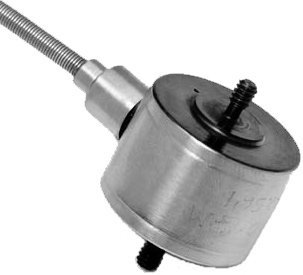
Model 31 low range precision miniature load cells measure both tension and compression load forces of 50 grams to 500 g. These models are our highest accuracy, rugged miniature load cells. Model 31’s welded, stainless steel construction is designed to eliminate or reduce to a minimum, the effects of off-axis loads. (The internal construction assures excellent long-term stability for ranges 1000 grams and above.) A modification permits this model to be completely welded for underwater applications. The Model 31 tension/compression load cell has male threads attachments. High accuracies of 0.15 % to 0.25 % full scale are achieved. Each bonded strain gage unit is built of welded 17-4 PH stainless steel for additional ruggedness.
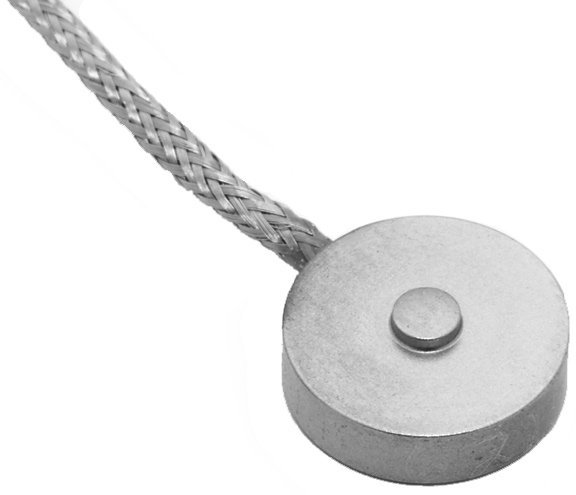
Model 13 (compression only) subminiature load cell is designed to measure load ranges from 150 g to 1000 lb. With subminiature dimensions, including diameters from 0.38 in to 0.75 in and heights of 0.13 in to 0.25 in, these units are easily incorporated into systems having limited space. Model 13 combines high frequency response and low deflection to achieve a combined non-linearity and hysteresis of 0.25 % to 0.5 % full scale. A balance module is included in the load cell’s lead wire cable for temperature compensation and should not be removed.
